CHEXX Payments: Crypto Deposits, Withdrawals and Networks
CHEXX uses a crypto-only payment model with 11 supported assets across nine networks. The asset list is USDT, USDC, SOL, ETH, BNB, TRX, GRAM, POL, BTC, LTC and TRUMP. For a Singapore reader, the key point is that CHEXX does not state an SGD fiat payment rail in this model. Deposits are organised by cryptocurrency and blockchain network rather than by local bank transfer, card or PayNow. For the wider product overview, see the CHEXX Singapore review.
CHEXX states that it does not charge a fee for receiving deposits and does not set maximum deposit limits. It also sets network-specific deposit minimums. On the withdrawal side, CHEXX states that withdrawal service is available for prompt withdrawal 24 hours a day, seven days a week, and provides 3 USDT on BEP20 as one withdrawal-minimum example. Those facts describe different parts of the cashier and should not be collapsed into one promise about speed or limits.
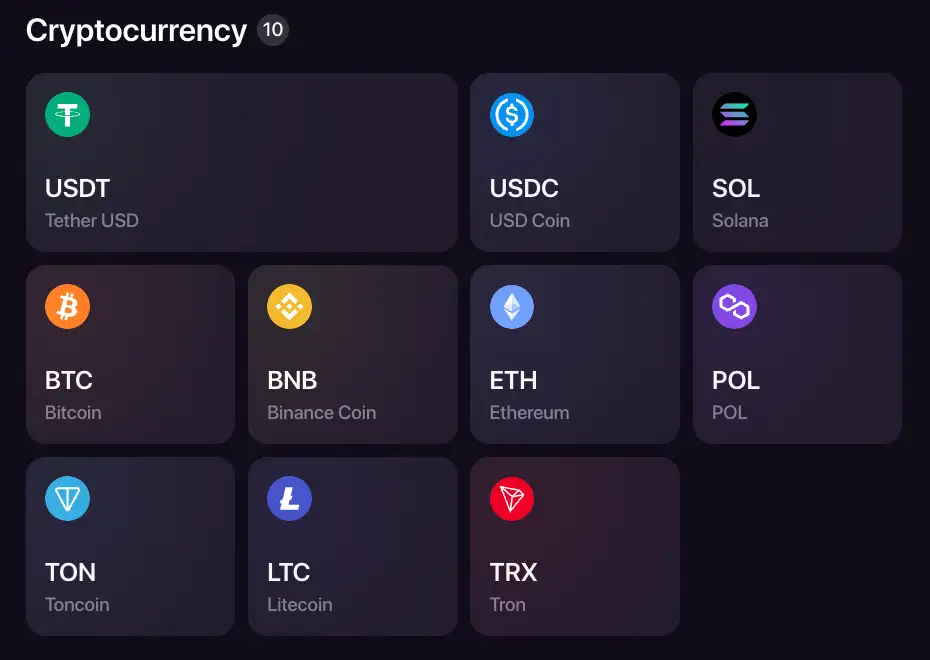
Table of Contents
- Assets, networks and transaction rules
- Assets and networks are two separate dimensions
- Minimum deposits by network
- Deposit receiving fee and maximum limits
- Withdrawal service is not an instant-payout guarantee
- KYC is conditional, not a universal withdrawal prerequisite
- What crypto-only means for an SGD-market reader
- Payments and bonuses use different thresholds
- Matching a payment route before transfer
- How deposits, withdrawals and KYC interact
- Deposit fees and withdrawal availability
- CHEXX crypto cashier in practice
- Supported payment assets
- Payment support channels
- Stablecoins across several networks
Assets, networks and transaction rules
| Payment question | CHEXX rule | What it means |
|---|---|---|
| Fiat or crypto? | Crypto-only | No SGD fiat rail is part of the cashier. |
| Supported assets | 11 | USDT, USDC, SOL, ETH, BNB, TRX, GRAM, POL, BTC, LTC and TRUMP. |
| Network count | 9 | ERC-20, BEP-20, TRC-20, Polygon, TONCOIN, Bitcoin, Solana, Litecoin and TRUMP. |
| CHEXX deposit receiving fee | 0 | CHEXX states that it does not charge a fee to receive a deposit. |
| Maximum deposit limit | Not set | No maximum deposit cap is stated. |
| Withdrawal service | 24/7 | CHEXX uses the wording “prompt withdrawal 24 hours a day, 7 days a week”. |
| Withdrawal-minimum example | 3 USDT on BEP20 | This is an example for one route, not a universal cashout minimum. |
Assets and networks are two separate dimensions
CHEXX’s 11-asset count does not mean there are only 11 deposit choices. USDT and USDC repeat across several networks. USDT is listed on ERC-20, BEP-20, TRC-20, Polygon and TONCOIN, while USDC is listed on ERC-20, BEP-20 and Polygon. Other assets sit on their native or associated network rows.
The practical result is that an asset name alone does not fully describe a payment route. “USDT” can refer to five different CHEXX deposit combinations, each identified by the blockchain network as well as the token. See CHEXX crypto networks for the full asset-to-chain map.
This network structure is one of CHEXX’s main payment differentiators. The platform supports major stablecoins across multiple rails while also including native assets such as BTC, SOL, LTC, ETH, BNB, TRX, POL, GRAM and TRUMP.
Minimum deposits by network
CHEXX publishes minimum deposit amounts by network and asset. The stablecoin pattern is simple: USDT is 5 USDT on each of ERC-20, BEP-20, TRC-20, Polygon and TONCOIN; USDC is 5 USDC on ERC-20, BEP-20 and Polygon.
Native-asset examples include 0.003 ETH, 0.009 BNB, 15 TRX, 66 POL, 3.8 GRAM, 0.00008 BTC, 0.07 SOL, 0.12 LTC and 3.4 TRUMP. These are crypto-unit thresholds, not fixed SGD equivalents. The complete 17-row grid is kept on the CHEXX deposits page so the overview does not turn into a second minimum table.
The asset-and-network format matters because the minimum belongs to the route, not to the brand in the abstract. CHEXX does not publish one universal “minimum deposit” number that replaces the grid.

Deposit receiving fee and maximum limits
CHEXX states that it does not charge a fee for receiving deposits. External wallet, exchange or blockchain costs are not included in that CHEXX receiving-fee statement.
CHEXX does not state a maximum deposit limit. Each supported deposit route has a network-specific minimum.
Withdrawal service is not an instant-payout guarantee
CHEXX describes withdrawal service as available for “prompt withdrawal 24 hours a day, 7 days a week”. This means the cashout service is available around the clock, but it is not an instant-payout guarantee or a fixed end-to-end processing time.
CHEXX also gives one concrete withdrawal-minimum example: 3 USDT on BEP20. It does not publish that amount as the minimum for ERC-20 USDT, BTC, SOL, LTC or the other withdrawal routes. CHEXX withdrawals lists the available cashout details.
KYC is conditional, not a universal withdrawal prerequisite
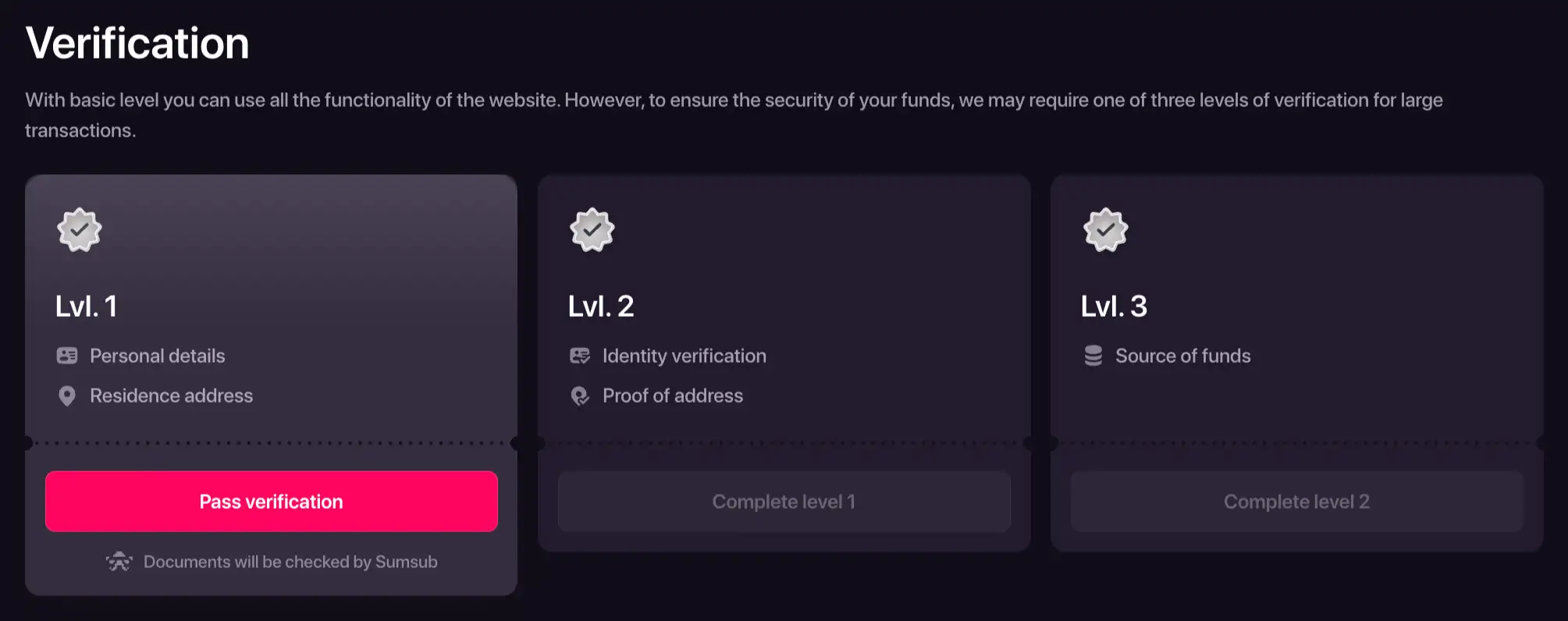
CHEXX states that KYC is required only if suspicious activity is detected. It also says that users declare their country in writing and that no additional confirmation is required by default. KYC is therefore not an automatic condition of every withdrawal.
A withdrawal request uses the cashier, while KYC becomes required only when suspicious activity is detected. One does not automatically trigger the other.
KYC is conditional on suspicious activity rather than attached automatically to every payment. CHEXX does not set one standard document checklist or processing-time promise for every account.
What crypto-only means for an SGD-market reader
CHEXX’s payment model should be evaluated as a cryptocurrency cashier, not as a Singapore-dollar banking product. The brand supports 11 crypto assets and nine networks, but no SGD bank, card or PayNow rail is part of that payment set.
This does not mean the crypto amounts should be converted into permanent SGD thresholds. An amount such as 0.00008 BTC or 0.003 ETH stays denominated in the original asset while its SGD market value changes. Compare the crypto amount itself rather than treating a temporary SGD conversion as the payment rule.
For readers who already use supported crypto assets, the main product question is whether the available network combinations match their preferred payment setup. For readers expecting a direct SGD cashier, the absence of a fiat rail is a material difference in how the product works.
Payments and bonuses use different thresholds
CHEXX’s bonus programme contains deposit-linked conditions, but those conditions are not substitutes for the cashier grid. The welcome package has a $5 minimum deposit, Tuesday Crypto Spins requires a crypto deposit of at least $10, Wednesday Deposit Reward requires at least $200, Friday Weekly Reload requires at least $100 and Saturday Deposit Bonus requires at least $50.
A user can therefore face two numbers: the cashier minimum for the selected coin and network, and the qualifying amount for a promotion. CHEXX bonuses lists the reward thresholds and wagering conditions.
Matching a payment route before transfer
CHEXX supports crypto deposits and withdrawals through its published asset and network set. For a Singapore user, the practical payment issue is that SGD bank, card and local fiat rails are not part of that cashier model.
Before sending crypto, the asset and network must match the route shown by CHEXX. USDT, for example, is supported through ERC-20, BEP-20, TRC-20, Polygon and TON, while USDC appears on ERC-20, BEP-20 and Polygon.
How deposits, withdrawals and KYC interact
Four different payment measures matter: 11 supported assets, nine networks, route-specific deposit minimums and the 3 USDT BEP20 withdrawal-minimum example. The asset count describes what can be held or transferred, the network count describes the blockchain rails, deposit minimums describe funding thresholds, and 3 USDT on BEP20 is a cashout example for one route.
The stablecoin rows show the structure clearly. USDT is present on five networks and USDC on three, while ETH, BNB, TRX, POL and GRAM share those network families as native or associated assets. BTC, SOL, LTC and TRUMP then add standalone routes. This is why CHEXX can support 11 assets while publishing more deposit combinations than asset names.
CHEXX does not have one minimum that applies across both deposits and withdrawals. Each amount belongs to a specific transaction direction, asset and network.
Deposit fees and withdrawal availability
CHEXX charges no fee for receiving deposits and sets no maximum deposit limit. Withdrawal service is available 24/7, with 3 USDT on BEP20 USDT as one route-specific minimum example.
The cashier is crypto-only, supports 11 assets across nine networks, charges no CHEXX receiving fee, has no maximum deposit limit, uses route-specific deposit minimums, offers withdrawal service 24/7 and applies KYC when suspicious activity is detected.
CHEXX crypto cashier in practice
CHEXX is a crypto-only payment platform with 11 assets across nine networks. It publishes a detailed network-specific deposit grid, charges no fee for receiving deposits and states no maximum deposit limit. USDT and USDC are available across multiple blockchain rails, while native assets have their own thresholds.
CHEXX describes withdrawal service as available 24/7 and gives 3 USDT on BEP20 as one minimum example. It does not state a universal instant-payout time or one minimum for every cashout route. KYC is conditional on suspicious activity.
Supported payment assets
CHEXX supports USDT, USDC, SOL, ETH, BNB, TRX, GRAM, POL, BTC, LTC and TRUMP through nine network families.
Payment support channels
CHEXX support is available 24/7 through live chat, [email protected] and the Telegram support bot @ChexxSupportBot. The help-centre language set covers English, Spanish and Portuguese. These channels are available for account-specific questions about a deposit or withdrawal route, including which asset and network is shown in the cashier.
Stablecoins across several networks
USDT is available for deposits on ERC-20, BEP-20, TRC-20, Polygon and TONCOIN, with a 5 USDT minimum on each route. USDC is available on ERC-20, BEP-20 and Polygon, with a 5 USDC minimum on each. This multi-network support is useful only when the sending wallet and CHEXX deposit address use the same blockchain.
For Singapore remote-gambling rules, see CHEXX licence and Singapore rules.
 ReactoonzPlay'n GO
 Hot Hot FruitHabanero
 Sizzling Hot DeluxeNovomatic
 Love Gems Hold and Win1spin4win
 Mystic Fortune DeluxeHabanero
 Fruit CocktailIgrosoft
 Sugar LandFelix Gaming
 Sweet RewardBF Games
 Trojan KingdomJust For The Win
 GemonexBetixon
 Book of DeadPlay'n GO
 Boogie BoomBooming Games
 Fuzzy WuzzyPoggiPlay
 Trickstar SpinsYggdrasil Gaming
 Single Deck Blackjack GoldSingle Deck
 American BlackjackClassic
 Blackjack Surrender OriginsSurrender
 Vegas Downtown Blackjack GoldGold Series
 VIP American BlackjackVIP
 Atlantic City BlackjackClassic
 Ultimate Blackjack with RachaelLive-style
 Double Exposure BlackjackDouble Exposure
 European BlackjackMultihand
 Premier Blackjack with Side BetsSide Bet
 Quantum Blackjack PlusMultiplier
 Perfect Pairs BlackjackSide Bet
 Vegas Strip BlackjackClassic
 Blackjack 21 ClassicClassic
 Classic BlackjackClassic
 RouletteRelax Gaming
 Double Ball American RouletteDouble Ball
 Dragon RouletteThemed
 American RouletteClassic
 Mega Fire Blaze RouletteMultiplier
 French RouletteNetEnt
 Mini Roulette 3DMini
 Roca Riches RouletteThemed
 Monopoly Roulette TycoonThemed
 Auto RouletteSwitch Studios
 Multifire RouletteMultiplier
 Quantum RouletteMultiplier
 Who Wants to Be a Millionaire RouletteThemed
 Lucky RouletteClassic
Created by the ”Chexx Casino” editorial team.